

The Illusion of Sustainability in the Modern Market
Hello! This one is very much derived from my research paper from senior year of college. Lots of work, time, documentaries, and readings were spit into this thing, but I tried to make it more fun and interesting rather than factual and tiresome to read (I have no idea how and if my professor actually read all 23 pages, but I did well so...). :p
I've shorten and edited this version for better enjoyment. And I hope you learn a thing or two.
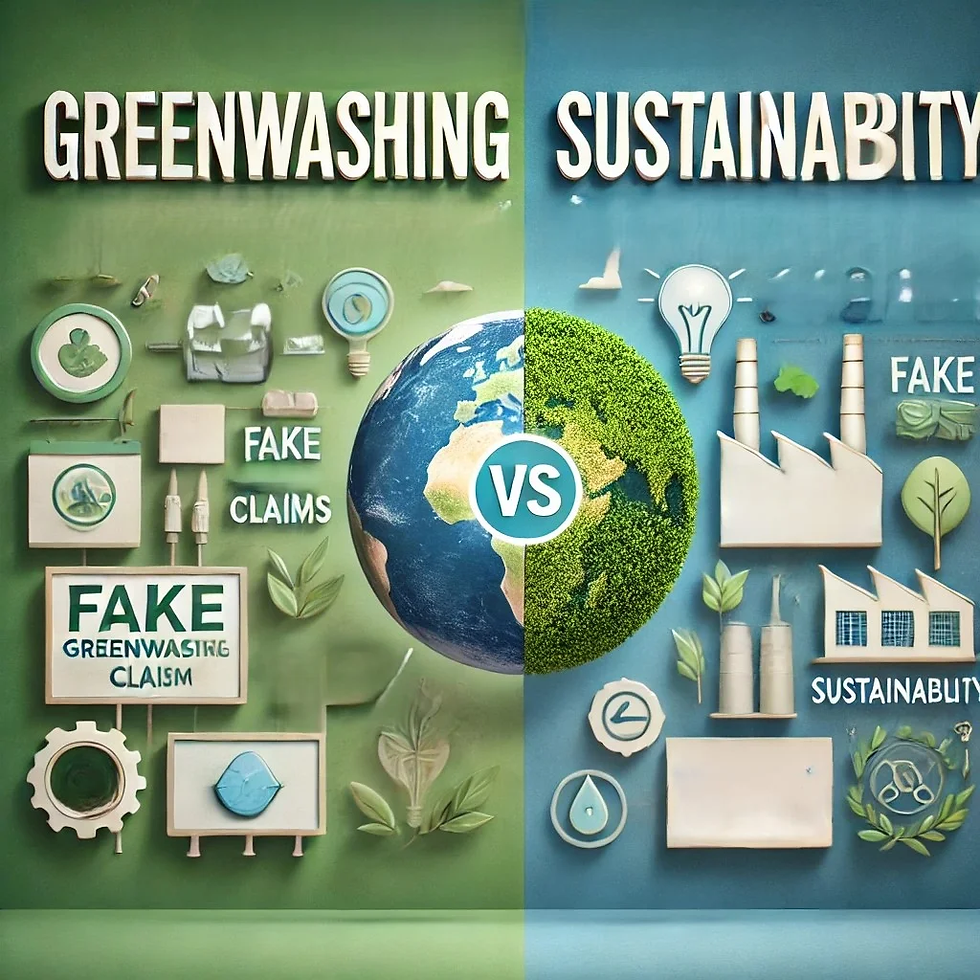
Massive retailer H&M lied to the public. So did Coca-Cola. Volkswagen was worse and combined lies with fraudulent conduct. These organizations were willing to intentionally mislead EVERYONE because sustainability has become more important to consumers and investors. That is why we are all subjected to “Greenwashing.” WOOHOO! Greenwashing is a general term that means using intentionally misleading claims about environmental practices to appear eco-friendly without real action. I will give a few examples of what to look out for, but companies have gotten extremely good at faking it, making it hard to discern what is real and what isn't. Greenwashing also goes farther to refer to organizations that are hiding behind false images of environmental friendliness when they are, in fact, causing serious environmental harm. While greenwashing might provide short-term benefits for many brands, it risks long-term damage to reputation, regulatory penalties, and loss of trust as scrutiny towards companies grows. Authentic sustainability, supported by authentic and genuine impact, is no longer optional, but rather a path to resilience, market leadership, and credibility. In a world increasingly driven by conscious choices, businesses must move beyond empty promises to truly integrate sustainability into their operations and values. This is apparently a really hard ask.
Pause. Recap: I know that was a lot of big words. Basically, companies are lying to everyone because a lot of people have suddenly decided to care about the planet too late. Therefore, by lying on their packaging, people don't do much reading on it, and there buy the product. Still causing environmental issues? Yes, but you wouldn't reaaaaaaaally know. Right? WRONG.
The 1980s was a prime time when companies started greenwashing because of growing concerns of environmental practices. This period saw an increase in environmental claims in advertising of being “green,” some of which were genuine, while others were exaggerated and deceptive. Over the next decade, while consumer interest in sustainability increased, greenwashing became more widespread. However, there was little regulation to verify the accuracy of environmental claims or practices for companies, allowing companies to make vague or unsubstantiated statements for a very long time.
Eventually, companies began adopting buzzwords like “eco-friendly,” “natural,” and “sustainable” in their marketing, often without evidence to back up these claims. While it is important to note that many companies are abusers of these terms, Chevron, for our first example, is one of the earliest and well-known companies that advertised false sustainability practices. No hate if you've used one, but just some new information for you.
Chevron's "People Do" advertising campaign featured TV ads, billboards, and print materials showcasing Chevron employees engaging in environmentally friendly activities like protecting endangered species, restoring habitats, and reducing pollution. These ads aimed to portray Chevron as a corporation deeply committed to environmental concerns. While the campaign emphasized environmental protection, it was all a façade. Chevron continued to engage in practices that caused significant environmental harm, such as oil spills,

deforestation, and carbon-intensive operations. It is crazy to me that they continued to promote their company doing all these amazing acts of helping the planet, only for people to dig in further and realize just how destructive they were. BOO THAT SUCKS.
The ads highlighted minor conservation projects (e.g., protecting butterflies) to divert attention from the larger, more damaging aspects of Chevron's business. This damage cascaded to many areas of the world, including the Amazon rainforest after Taxacon, a gas company located in Ecuador, signed a deal to merge with Chevron, but their operational practices caused numerous lawsuits and cost billions of dollars to fix. Dumping toxic waste ad spilling gasses all over the rainforest not only effected the wildlife, but local communities as well. In spite of a massive amount of money still owed by Chevron to the Ecuadorian government, Chevron was instead engaged in a decades-long legal battle to avoid accountability for their actions. Sound like some people we know too right.... haha.
The best and more recent examples of greenwashing are from Volkswagen, H&M, and Coca-Cola. These brands are still some of the world’s most popular brands around the globe and are still being used and supported financially.
Here is what H&M had to say:
“By 2030, all H&M products will be made from sustainable materials....H&M is committed to a circular fashion system where garments are made to be reused and recycled."

Volkswagen got into greenwashing as well:
"We are committed to environmentally friendly, low-emission vehicles, and our advanced diesel technology offers excellent fuel efficiency while reducing harmful emissions."
Not to be outdone, Coca-Cola put this out there:
Climate change is becoming more apparent in everyday lives, raising more cause for urgent action to address environmental issues. Companies want to respond to the growing need of the consumers to have sustainable practices and avoid the appearance of "unsustainability". Governments, policies, and larger international companies have pursued stronger sustainability laws that threaten companies

that do not prioritize sustainability, facing the possibility of fines, bans, or even the loss of market access. Companies like H&M, Coca-Cola, and Volkswagen greenwash because it allows them to appear eco-friendly without making costly or disruptive changes to their business models. IF they're still able to make money quickly and effectively without getting caught, it makes things more difficult for those trying to "fix them" and do the right thing.
Now for the good ole fast fashion: A clothing brand, for example, may promote a "sustainable" collection made from organic cotton but fail to mention the large-scale water consumption and pesticides involved in growing cotton, or the exploitative labor practices in its supply chain. H&M has faced criticism for promoting 'sustainable collections' while continuing to operate within the inherently unsustainable fast-fashion business model. EW. This tactic misleads consumers into believing they are making eco-conscious and cheap choices, while the systemic issues remain unresolved. If consumers were to discover this, it can lead to mistrust from the consumers about the company because it gives an incomplete picture of a product's environmental impact. Or, in my case, absolute disgust for a company and the product I sadly own and therefore will throw it away or drive to a local Platos Closet.
H&M has had many campaigns that have misled consumers. One of the most famous ones is the “Conscious” collection which was advertised for now being a sustainable choice in their production, claiming the use of eco-friendly materials and processes (I would like to know if those practices were ever in the room with us). However, investigations and legal challenges have raised concerns about the validity of these claims. The collection is promoted as a more sustainable option, with the company asserting that these garments are made from materials like organic cotton and recycled polyester. The brand has used terms such as "sustainable" and "environmentally friendly" in its marketing materials to appeal to eco-conscious to consumers yet they just aren't. In July 2022, H&M faced a class-action lawsuit in New York, alleging that the company engaged in deceptive marketing practices by overstating the environmental benefits of its "Conscious" collection. The lawsuit claimed that H&M's advertising misled consumers into believing that the products were more sustainable than they actually were. Further scrutiny arose when it was revealed that some items in the "Conscious" line contained up to 100% polyester, a material known for its environmental drawbacks, such as non-biodegradability and microfiber pollution. I also found in my research that some boxes from H&M were secretly tracked because of all the deceptive ways in which they lied to producers and consumers on how they really make their clothes. Despite all these allegations, H&M has managed to avoid significant legal repercussions somehow. In May 2023, a greenwashing lawsuit against the company was dismissed, with plaintiffs withdrawing their claims. This outcome has raised questions about the effectiveness of legal avenues in holding corporations accountable for misleading environmental claims.
Overall, I hate H&M. And don't even get me STARTED on Shein. If you live on this planet and know that name, then you know all the shitty things they do and make and yet they are still an active business. I will digress for the purpose of keeping this shorter...
For a good example of a sick company doing the right things, Patagonia, a popular outdoor clothing and equipment, produces and publishes a detailed report on their supply chain and environmental initiatives that reinforce the trustworthiness of the brand. Furthermore, being honest to consumers can also contribute to accountability through transparency. Companies can be evaluated on actual performance rather than hide behind vague labels. Wouldn't it be better to just be honest? Thanks to this awesome brand, everyone knows what they are getting into without any regret.

Some labels to look out for- B-Corp and ESG analysis which are two critical frameworks that shape corporate accountability and sustainability, addressing different but complementary audiences and goals. B-Corp certification, managed by the nonprofit organization B Lab, is a rigorous, holistic measure of a company’s social and environmental performance, transparency, and accountability. It evaluates businesses on five major impact areas- governance, workers, community, environment, and customers- and requires companies to amend their governing documents to prioritize stakeholders over shareholders. It's a big deal to have this label on your products because it shows something REAL behind what you're buying. This label is found on all kinds of products, including makeup and household items. Always look for a symbol like this if you want guaranteed quality products.

One more thing. Behind the façade, practices such as the widespread failure of plastic recycling programs eroded the very trust the company sought to build. The documentary Buy Now: The Shopping Conspiracy on Netflix (truly terrifying documentary that really puts things in persective on how our planet will look in the next coming years if we're not more careful) highlights how consumers are flooded with messages to buy, often under the guise of eco-consciousness, but they are not the root cause of overconsumption. Instead, they are constantly"encouraged to consume" by carefully crafted marketing strategies designed to maximize profit. Because we all NEED to buy that thing we don't have right? Over time, the disconnect between the promises made and the reality of these practices leaves consumers disillusioned and wary of corporate claims, a phenomenon that damages long-term brand loyalty. Fast fashion is a major contribution to waste, with 15 million garments arriving in Ghana every week as “waste,” overwhelming local ecosystems. These hidden trade-offs reveal the critical need for stronger enforcement of environmental laws. As companies attempt to "hide" their waste and harmful practices, regulators are attempting to ensure accountability, but the path to compliance remains challenging for many industries that rely heavily on cheap, disposable goods.
I highly recommend watching that documentary on Netflix, and also strongly suggest you research companies and businesses before truly investing your time and money into them. Today, companies are all about making money and fast to be the best of the best, no matter the cost. Putting peoples communities in danger, destroying natural habitats, and even going so far as to do animal testing to ensure their product is good and safe enough to sell to people. That's disgusting. I know I didn't touch on this topic specifically this time, but just ties into all the nasty things that happen behind the curtain when we choose to ignore.
Stay safe and be practical out there! The world needs you just like we need it!
Sophie 🐞


Comments